The Pillar of Truth
Pastor Kris Burke
Home
Sermons
Copyright © 2015 United Faith Church | All rights reserved. No part of this publication may be reproduced, distributed, or transmitted in any form or by any means.
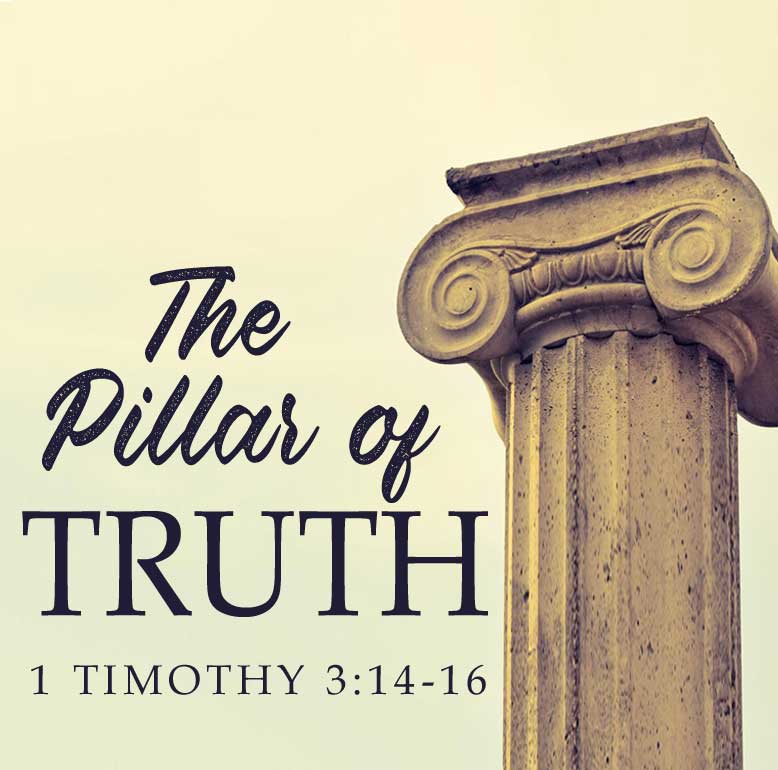
1 Timothy 3:14-16 (NIV)
Although I hope to come to you soon, I am writing you these instructions so that, if I am delayed, you will know how people ought to conduct themselves in God’s household, which is the church of the living God, the pillar and foundation of the truth. Beyond all question, the mystery from which true godliness springs is great:
He appeared in the flesh,
was vindicated by the Spirit,
was seen by angels,
was preached among the nations,
was believed on in the world,
was taken up in glory.
Sermon Text
The Pillar of Truth
Sermon preached by Kris Burke - United Faith Church, Barnegat, NJ
What he was talking about—the rules that you wouldn’t think about: the haircuts, a nice pressed uniform—how all of this stuff is so important to the army as a whole; how it’s critical to their mission. And I was thinking about it, and I’m like, “How does that make sense?”
It causes uniformity through the entire army. It causes every man to look like the man next to him. What does that do for the mindset of the soldiers? It makes them feel like they’re part of something bigger—that there’s a bigger picture besides themselves—that they are fighting for something bigger than themselves.
It makes them know that they are part of a unit—that every person has the same thing here. And the small things—the haircuts and the uniforms and making sure your bed’s made—everything contributes to that mindset of being a unit, of being brought together, of being strong and fighting for the bigger picture above yourself.
That spoke masses to me. You know why? Because that is the church. That is what the church is meant to be.
Just like the army, in the church there’s two parts. You have your basic training—where you go into basic training—where the army serves you, and they get you ready, and they prepare you and have everything set to make sure that you’re ready to go into active duty, to graduate, to come onto something more.
When you go into active duty, it’s no longer the army serving you, but what does it become? You serving the army. Now you’re ready. You’ve been through the training. You know what you’re supposed to do. Maybe you’re nervous at first. Maybe there’s those first few missions that you’re nervous about, but when you start getting into the role of things, what do you start noticing? That confidence builds.
You know your role. You know your small job that contributes to the big picture—the overall. You see, the problem in the church is that people want to stay in basic training forever. They want to stay where the church serves them forever. For the next 40, 50 years, the church is tending to them. The church is talking to them. The church is dealing with them, and they never graduate.
You know why? Because they don’t know the bigger picture. They don’t see the bigger picture. And that is a problem in the church: that we don’t see the bigger picture. It’s great when you come in. It’s great—the church will serve you. The church will make your plate. They’ll make sure you’re all good and dressed all nice. But guess what? It’s not forever.
We need to see the bigger picture today, Church. There is a coming age of evilness. There is a spirit of ungodliness that is arising in the world. You guys have seen it. You guys turn on the news. What do you see? Just darkness. You guys speak to people out in the world—what do you see? Just more darkness.
And God is very specific. He says that as the age of darkness arises, that there will be something to stand up against it. But guess what? It’s not me, and it’s not you. It is the church that will stand up against all the age of darkness. Amen?
"It is the church that will stand up against all the age of darkness."
You see, there’s no individuals in the church of God. The church of God is the Beloved. The church of God is the one to stand up. The church of God is what’s being empowered in this age of darkness. And the church of God is what will stand up and put the enemy underneath their feet.
The church of God has a role in the upcoming age, and it’s very important. First Timothy 3, verses 14-16: “These things I write to you, though I hope to come to you shortly. But if I am delayed, I write so that you may know how you ought to conduct yourself in the house of God, which is the church of the living God—the pillar and ground of the truth—and without controversy, great is the mystery of godliness: that God was manifested in the flesh, justified in the Spirit, seen by angels, preached among the Gentiles, believed on in the world, and received up in glory.”
So Paul is writing to Timothy, and he’s saying, “Look, I think I’ll be there in time, but in case I’m delayed, this is how you’re supposed to conduct yourself.” Paul wasn’t sure what Timothy was going to run into when he got to this church, so he says, “This is what the church is meant to represent, and this is what the church is supposed to be teaching.”
When you get there, this is exactly what you should see. He breaks it up into two parts. The first part, he talks about the church—what it represents—about it being the pillar and ground of truth. And after that, he talks about what it should be teaching.
You know, “the pillar and ground of the truth”—that hits me. That hits my heart. That hits me in the soul when I hear that the church of God is meant to be the pillar and ground of the truth. It is meant to be unshakable, unmovable.
"The church of God is meant to be the pillar and ground of the truth. It is meant to be unshakable, unmovable."
You see, in the coming age, there’s going to be darkness that arises. Society is all going to be brought down in ungodliness. But the church is not supposed to be affected. The church is supposed to stand on solid ground. It’s supposed to be a pillar upheld—and that pillar, it is the truth. Truth is Jesus Christ. The more truth you have, the more of Jesus Christ you have. It’s the same thing in the church. It doesn’t change. He is the pillar and ground of truth, and that is what the church is supposed to lay their foundation on.
You know, one thing about my job is I get to see the degradation of society firsthand. A lot of you guys turn on the TV and you see it or you hear about it. I get to see it firsthand. And one of the things that I hear from everybody—I come home and tell my wife or my friends stories—and the same thing I hear out of every single one of their mouths is, “Wow, I can’t believe that happens in Barnegat.” And I got news for you: it’s not just Barnegat. It’s happening everywhere. Society is changing. Society is getting dragged down.
The other day—one of the saddest calls I’ve ever gotten in my career—a little girl, 11 years old, she calls me up and she’s sobbing on the phone. And she’s walked into a bathroom and found her mom on the floor unconscious, with needles spread around her. And she’s holding her mom’s head in her arms, and she’s on the phone with me sobbing, and I’m trying to walk her through making sure that she’s breathing and everything—choking back tears.
As this girl’s stroking her mom’s head, saying, “It’s going to be okay. It’s going to be all right, Mommy. Be strong. It’s going to be okay. We’ll get through this.” And this girl was like 11 years old, going on 20, the way she was talking.
And I knew it was because everything that she had been through in her life—that her childhood had been robbed from her, that everything in the world had stolen away the innocence out of her—that she had to grow up so fast.
And I’m choking back tears talking to this girl, and in my head I’m saying, “God, what hope is there? What hope is there for someone like this? What hope is there for an 11-year-old girl that has all hope taken from her, that has no childhood and has to be the adult in the house—no innocence left? God, what hope is there for someone like this?”
The church has a role. The church has a role in the upcoming age. Paul calls it the pillar and ground of the truth—that when all hell is breaking loose in the world, when everything is happening, when children are getting abused and everything is going down—guess what? The church will stand. The church will be strong.
The church will be a pillar, a high tower with a light on the top that says, “This is the house of God—the pillar and ground of truth.” It’s time for us to move up. It’s time for us to graduate. No longer in basic training. No longer the old. Grow up. We have to move up into the active duty. There is a war to be fought. There is walls to be held up in the church, and they are done by the people of God who have stopped worrying about themselves and said, “God, there is a bigger picture, and I’m going to fight for it.”
You have to know what you’re fighting for. Just like the world—there’ll be the soldiers and they say, “Look, somebody has to stand up and fight. Somebody has to do it. Otherwise, my families and the way of life could be threatened in the future. Somebody has to stand up now.” And I’ll tell you, church of God, somebody has to stand up. It will be the church of God.
Paul says—he talks about what the church represents: that pillar and ground of truth. And then he goes on to explain what the church sounds like—what it teaches. And it says that “God was manifested in the flesh, justified in the Spirit, seen by angels, preached among the Gentiles, believed on in the world, and received up in glory.”
Those represent three things. They give a description of Jesus’ life. They are the basis of our salvation. And they are also an example of what and how the church should be teaching today. Each one of these things fulfills a role that the church is going to have in the upcoming age.
Number one: God was manifested in the flesh. You see, Jesus’ birth, death, and resurrection are the most important events in human history to this day. Why? Because they affect the most people. When it happened, it would affect millions upon millions of people. And still today, it is impacting millions of people. It is the most important event.
And Jesus coming in the flesh—being manifested in the flesh—that is so important because in the flesh it has to do with me. If He came as a God, well, He overcame sin, but He’s a God. That’s not me. But because He came in the flesh—because He humbled Himself as a man—now it has to do with me.
You see, Jesus—as He walked in the flesh, as He walked as a man—He never left a doubt with people. He never left a doubt that He was maybe a man, but that there was something different about Him—that He didn’t come from the world like everybody else—that He was sent from God.
And people maybe wanted to kill Him for what He was saying. People maybe wanted to kill Him for pointing out sin and speaking into people’s lives. Right before everybody would get riled up to want to kill Him, you know what He’d do? He’d do an awesome miracle. He would do something unexplainable. He would do something unobtainable by a regular man. He would do something that people were shocked and awed about.
Jesus Christ didn’t talk about the power of God. He lived the power of God every day. He was constantly bringing divinity into reality in people’s lives. He made it real to people. It wasn’t something He talked about. It wasn’t something that was only words. It was the power of God being lived out.
"Jesus Christ didn’t talk about the power of God. He lived the power of God every day."
He completely overhauled everything we knew about religion. The whole system of religion that had been put into place—He overhauled it. No longer was it one time. No longer was it one place. No longer was it one person. Now it was His children.
His death and His resurrection—Him sending the Spirit—God became manifested in the flesh: in your flesh, in my flesh, in the church’s flesh. He came and manifested Himself even today.
And just as Jesus brought that divinity to reality in people’s lives—just as He brought the divine into the flesh—so we as a church need to be bringing the spiritual into the physical in people’s lives. We need to make it reality.
You see, we can’t be called the church of Jesus Christ in an abstract way—where our words are close to God, but our lives and actions are far from Him.
You know, I had somebody from work call me the other day, and he said, “Kris, I have a question for you. Does it say anywhere in the Bible that God wants you to be happy?” And I always thought about it for a second. I’m like, “Wow, you know, that’s a good question.”
And he said, “Look, somebody called me up and they told me that, ‘Look, you got to do whatever makes you happy. Go do whatever you got to do. Go do whatever it takes, but be happy because God wants you to be happy.’”
I explained to him that there’s no such thing as being happy in the Bible. You know why? Because happy is pleasing the flesh. Happy is temporary. Happy is whatever makes you good—whatever you feel like doing. But it does speak about joy in your salvation that never leaves you.
And it was awesome because when he spoke to me, he knew there was something wrong with it. He didn’t know exactly what it was. He didn’t know a verse in the Bible, but he knew that there was something wrong with it.
And as I got off the phone with him, you know, I was kind of praying and I said, “God, this is the representation that You have in the world. This is what people tell about You. This is how people speak about You. They say, ‘Yeah, sure, do whatever makes you happy. God wants me to be happy.’” That makes sense, kind of, in a messed up kind of way.
But there’s no real relationship. Nobody’s expressing what they have learned by trial and fire. No one’s grabbing on to the truth that has brought them through the hard and good times that they can go in and pass it to another.
You see, that’s not the representation I want for God. I want a church that brings the spiritual into the physical in people’s lives. You see, they should have no doubt of where you’re from—that you’re different—and that you have been sent from God. Jesus Christ shut the mouth of the critics all the time based off of how He would make it real.
The world is searching for something real. The world is tired. There are people in the world that are tired of the lies. They’re tired of the deception. They’re tired of going around and around in a circle, and they’re looking for a solid ground to step onto.
This is our chance, church. This is your opportunity to speak into somebody’s life and say, “This is the pillar and ground of truth. Stop going around and around in the lies. This is truth. This is solid ground.”
Why does the world turn to sin? Because they think it works for them. Because they think it’s producing results in their life. They think lying and cheating and stealing are going to produce something in their lives—that they’re going to further themselves.
But what would happen if the church of God—being Christ manifested in the flesh—was able to turn to them and open up their eyes and say, “Look where your ways have gotten you. You’re not as far along as you thought you would be. You’re still a slave to sin. Your heart is still unhealed, and I can see the pain inside of you. There is a death sentence over your life, but it’s okay. There’s hope. There is hope for you because Christ has manifested Himself in the flesh. He can save you. He can heal your heart. He can break the death sentence. He can pull you out of hell and bring you into life.”
I don’t want to play church. Come in. See my life. Touch God. See what He’s like. He will change your life. He will transform it. It’s not abstract. It’s not fake. This is real life. This is Christ manifested in the flesh.
This is real talk we’re talking about. This is God coming and doing something—an amazing miracle among His people. Let it be a place where God is not talked about but lived out every day—where prayers are being answered and people are being delivered.
Next we have here that He was justified in the Spirit. As I said before, you look at Jesus’ life: wherever He walked, His actions always spoke a lot louder than His words.
Wherever He went and whatever He did, He always would just let what He was doing and how He was speaking—He would let His wisdom and the miraculous things He did and the way He spoke—He would let them speak about who He was.
All the time people would come to Him and they said, “Lord, tell us plainly. Are You the Son of God or are You not? Just say it.” Because Jesus always let His actions—what He did, how He delivered, the miracles, everything He knew—He always let that speak about who He was.
You see, the Spirit of God was upon Him, and it was crying out, “Lord of lords and King of kings.” Everywhere He went and everybody He touched, the Spirit of God was upon Him. And as He touched another person, it would cry out, “Lord of lords and King of kings.”
And in the same way, people may ask you, “What gives you the right? What gives you the right to speak into my life? What gives you the right to tell me what is true and what is a lie? What gives you the right to tell me what’s right and wrong and give me direction in my life? What gives you the right to preach the Word of God?”
And I’ll tell you, church, it can only be one answer: the Spirit of the living God. That is what justifies the works of the church. Otherwise, we’re just giving Him lip service.
You guys know the story of the fig in the Bible. Jesus, a far way off, looks and sees a fig tree in the distance. And it looks great. It’s green. It’s leafy. He says, “Oh, I can’t wait to go up there and get myself some fruit.” And He walks in, He gets closer, and He notices something: that good as that tree looks, it hasn’t borne any fruit—that there was nothing being provided off of it. And what did He do? He cursed it and caused it to wither and die. Why? Because it was providing for no one. It was giving nothing and helping no one. That’s what we become without the Spirit of God: a leafy tree. From a distance, I may look great. I may know all the Bible verses. I may sound great in public.
But you know what? When people get close, I want them to see fruit in my life. I want them to see fruit coming alive. I want to see children rescued. I want to see people being transformed. I want to see my life being transformed and the power of God inside of me justifying all of my works.
That’s how the Spirit justifies the church. It brings holiness in people’s lives. It breaks the power of sin over people. It brings healings and restoration of families and healed hearts. It brings life to those who were dead.
You know why? So that one day when someone says, “What gives you the right?” you can say, “Look, all I know is that the Spirit of God is alive. It is well. He has risen me from the dead. He has healed my heart and brought life inside of me. What other justification do you need besides the Spirit of God and a life that has been transformed by God?”
We need that Spirit of God in the church. It has to be the most important because that is what justifies all of our works in the world. Without it, we’re fruitless. And I’ll tell you, we cannot bring anyone out of sin without it. There is nothing—there is no modern technology. There is no bomb, no nuclear bomb—that is powerful enough to drag somebody out of the clutches of Satan and bring them into the Spirit of light.
Human will—trying really hard—knowing all, maybe, verses—will not do it. Only the Spirit of the living God coming upon a man can do it. We need that Spirit today, because without it, we’re just playing church.
He was seen by angels. You see, Jesus and the angels—they had a long history. Jesus and the angels were both present when God laid the foundations of the world. The angels announced Jesus’ birth. They worshiped Him. They ministered to Him during His temptation. They watched in apprehension as He was in the garden of Gethsemane. They observed His agony. They watched His death. They rolled away the stone from His tomb. They told the women of His resurrection. And they watched Him ascend back into heaven.
The angels—they saw God. When it says here that He was “seen by angels,” the word “seen” is the same word that we derive the English word “eyeball” from. So the angels—they were eyeballing God. You ever hear that? Like, you know, he’s eyeballing you—like he’s watching you real close. That’s what angels were doing. They were watching God. They were studying Him. They were observing all of His actions, and they were amazed. They were in shock. They were in awe. This is the Lord of glory. This is Who had been present at the foundation of the world. This is the Son of God, and He has lowered Himself into the body of a man. He has humbled Himself into a manger. He has given Himself willingly into the hands of unrighteous men to be brought to His death. And they said, “Wow. This is unbelievable. This is amazing.”
What is angels’ whole job—their whole existence? It’s to bring glory to God. In Revelations it says, “Then I looked, and I heard the voice of many angels around the throne, and the number of them was ten thousand times ten thousand, and thousands upon thousands, saying with a loud voice, ‘Worthy is the Lamb who was slain, to receive power and riches and wisdom and strength, glory, honor, and blessing.’” That’s their whole existence: to bring glory to God.
Every time they’re a messenger, every time they tend to God, everything they did was to bring glory to God. You see, and as they’re watching God—as they’re watching Him in admiration, as they’re watching Him in awe—you know they were still missing something. God did not bring salvation and grace to the angels. God brought salvation and grace to the church of God. He brought salvation and grace to you.
The church’s job is not to watch. The church’s job is not to look. The church has received the great gift of salvation. The church of God has received salvation and grace. The church of God is called His beloved.
So how much more should we—as the ones who had our Lord and Savior die on the cross for us—how much more should the glory of God be brought forth in our lives? How much more should every action that we do, every step that we take, every word that comes out of our mouth—how much more should it be bringing glory to God?
The angels are arrayed around the throne, and they’re singing 24/7: “Glory to You, Jesus. Glory to You, God. All wisdom and honor and blessings and strength. Glory to You, God.”
How much more should the church of God be bringing glory to His Name? The angels should be watching. They should be looking down upon us in awe. They should be looking down and taking notice of us and saying, “Wow, I can’t believe it. Look at all they’re doing. Look at all they’re accomplishing. They’re bringing even more glory than we are. This is unbelievable.”
You see, we are heirs in the kingdom with God. With Jesus Christ, we are heirs in the kingdom. Why? It says that His intent was that now, through the church, the manifold wisdom of God shall be made known to all the rulers and authorities in the heavenly realms.
You are the carriers of God. You are the carriers of the wisdom of God. The church, made up as a whole, is the carriers of the wisdom of God—to make known to all nations, all principalities, all heavenly authorities—in heaven all the way down to hell—that Jesus Christ is alive and He reigns.
The next thing we have here is that He was preached among the Gentiles. When Jesus was walking around, He didn’t just go to the Jews. He didn’t go to the qualified. He didn’t go to the clean. He didn’t go to the ones that had it together, or the ones that deserved it the most—the ones that had ancestors for thousands of years worshiping God and being a lineage of godly people. He didn’t just go to those people. He went to the dirty. He went to the unclean. He went to the unworthy. He went to me. It’s really important the church does not forget where they came from. The church knows their past.
You see, your past—it doesn’t disqualify you from the prize of Christ. In the opposite, it allows the grace of God to abound all the more. People like to act—especially in the church—they like to act like their past never happened to them, but they carry around the pain of all of the past, but the actions—the acts—never happened. That’s not what the church is meant to be.
Don’t forget where you came from, because where you came from and what you have been delivered from is hope to the world. It is hope to another person. The church doesn’t look at another and say, “I’m better than you.” It looks at them and says, “I am exactly like you—lest the Spirit of God in my life. And by that grace, by that power, I have been transformed and made new. And that is hope for you.”
“If God rescued a wretched man like me, He can do it to anybody. He made me clean. He made me precious in His sight. He brought me into the church and called me His beloved.” I’ll talk to somebody and they’ll say, “Well, Kris, you know, I don’t really need to go to church. You know, I’m sanctified at home,” and all this other stuff. And I say to them, “The church is the beloved of God. The church is the beloved of God. The church is what He looks at as precious in His sight. The church is when He’s in heaven looking down that He’s inquiring about what’s going on. It is the church that He looks at.”
And there is hope in the world because of what you have been brought from—because you have been brought into the church—because you have been counted among His beloved—because you have been changed.
What is the only qualification for this kingdom? And what does it say in the Word? That Jesus did not come for the healthy, but He came for the sick, for they are the ones in need of a doctor. That is the only qualification: that you are sick.
And you go out into the world as that sick man that has been made new. You go out and make the sick healthy and say, “Look, the power of God is so great and so awesome that I was sick and dying in my sin, yet He transformed me and made me new.”
We need to go out and preach the Word of redeeming power. You see, there are people in the world that are looking for that redeeming power. They’re looking for redemption. They’re looking for another chance. They’re looking for something different than what they have received thus far. They’re tired of being run over. They’re tired of being walked upon. They’re tired, and they’re at the absolute bottom, and they said, “What hope is there for me?” Then you come and preach the redeeming Word of power that was enough to transform you.
That is the call of the church—not to just speak fruitless words, but for Christ to be manifested in the flesh of the people of His church—to go out and speak a redeeming Word: a Word that the world needs to hear, a Word that the broken are searching for and thirst for, the Word that the elect of God will be drawn to.
It says that “He was believed on in the world.” When I hear “believed on in the world,” the first thing I think of was the centurion. The story goes that Jesus was doing miracles and awesome things, and He walks into the town of Capernaum. And as soon as He walks in, He didn’t have a chance to do any miracles. He didn’t have a chance to do any teachings. It wasn’t like this centurion was walking around one day on a patrol and happened to see Him and see that He was doing miracles and went and tried to get some for himself. No, he knew Who this God was.
As soon as God walked into the town, there was an automatic recognition. There was a response to Who this God was. And he comes to Him and says, “Look, my servant is dying. Can You heal him?” And Jesus says, “Sure, bring Me to him.” And he says, “No, no, You don’t even have to come. I know You. You’re God. You can do it from here.” And even Jesus is shocked: “In all of Israel, I can’t find anyone of such great faith.”
But in this man, who has no idea about the history, who has no idea about the law, who has no idea that the Jews have been waiting for a Savior for all this time—“That’s You, God. It’s You. You can do it. You have all power. You have all authority. You can do it from where You stand.”
And Jesus says, “This is awesome. This is great. There is real faith in this man.” I love this because there was no convincing. There was no—Jesus had to do some miracle. Jesus had to break down the Word in 20 different spots in a seven-point sermon and break it down for him to finally believe. No, there was no convincing for him. The centurion saw and knew. There was a response to what he saw and what he knew—that there was a God inside of this man of flesh.
A lot of times, I used to spend time trying to convince people to come to God. And I would say, “Yeah, He’s really great. You’ve got to come. You’ve got to try it out. And you’ve got to check it out. You’ll love it. You know, it’s not boring.” And I would talk until I was blue in the face.
And I remember saying to God one time, “God—and you know what, actually, I convinced one person that can’t come,” and he showed up with a hangover. And I was like, “All right, God, I’m not convincing anybody anymore.” There’s no convincing necessary. The response is so important. Even when me and Jessica are in a youth group and we give a word, the first thing we look for in the kids is their response. Is it something they need to consider? Is it something they need to think about? Or is it something that they’ve been searching for, that they’ve finally received? Is it something that they’ll take home with them and dwell on it? Or is it something that transforms how they act in their life?
For me, I remember being this messed up, dumb, just broken kid and walking into church—not thinking that this day was going to be any different than any other day—walking into church and sitting down. And like, “Okay, hour and a half, go.”
But you know what was funny? As dumb as I was, as messed up as I was, as dark as I was, I remember sitting there and hearing the voice of God. And I remember feeling something. And I didn’t know what it was. I couldn’t explain it to you. I couldn’t point it out in the Word to you. But all I knew is that God was calling me to my knees. And I remember going to my knees and God coming upon me. And I said, “God, I didn’t know what it was.” I couldn’t explain it to you. But I knew that I needed more. I knew that this was something I had been searching for. I knew that this had been a calling upon me—that there was something here. I didn’t know what it was, but I was going to find out more. And I was going to find it for my life.
You see, the response is what separates the goats from the sheep. Some may enjoy it. Some may like the music. But eventually, when rubber hits the road, you’ll see them fade away—maybe when you run into an issue with them being confronted about something in their life. “No, this isn’t for me.”
But I’ll tell you, the sheep of God—they’re drawn to the Spirit of God. And this Spirit of God—this response that wells up inside of them—it causes life. It causes something different inside of them. It causes a relationship to be forged. It causes something solid that they can stand on during the hard times, the good times, the easy times, and the times when you’re being challenged—all of those times. That is the response of God in His sheep.
You see, goats try to blend in with the sheep, but there’s always a difference. I’ll ask you today—even if you’re new, even if you’ve been coming for a little while—do you feel that inside? Do you feel that call inside your heart that it’s something different, something new? You’re not sure exactly what it is, but you believe that. You just know you want more of it. That’s the seed of God. Water it. Give it sunshine. Tend to it, because it will never stop. It will continue to grow, and it will draw you closer and closer to your Lord Jesus Christ.
There was a family a while ago. They didn’t come to church, but I knew God had me with them for a time. I used to go and share the Word with them. And I used to—for a solid year—I was at their house every single week, preaching the Word of God to them.
And I remember that as that time started to go on, and I started to notice that they were fading away—that the connection was starting to be severed. One by one, I started to notice that the kids were disconnecting with me, and one by one, they totally lost contact. And I said, “Lord, what did I do wrong? What more could be done? I don’t understand it, God. What can I do? How can I grab them?” And I remember God saying to me, “Kris, there’s only so much you can do with goats. But there will be a time when you won’t be preaching to goats anymore—when the sheep of God will hear My voice, will hear My Word, and say, ‘Bring me into the pen.’ When there will be a response in the heart of people, when you don’t have to convince anybody.”
“When there’ll be no more convincing—no more trying to work it out and show it in 17 different ways to find a way that appeals to them. It’ll be no more of that. But the sheep of God—the response of God—will just be welling up inside of people because they have this seed inside of them, because they are called sheep, and God is calling them back into their pen.”
That’s the job of the church: is to prepare the pen, is to prepare the place, and then to go out and grab them and bring them in. That is your job. That is your calling. Jesus Christ was believed on in the world. He was called on in the world. There are those who recognize Him for Who He is and just know that this is what they’ve been searching for. And those are the ones that God’s calling us to.
Finally, He was received up in glory. So Jesus—He comes as a man. He goes through His whole life sinless. He dies on the cross for our sins. He rises up again and walks the earth. And then He goes and ascends back into heaven and sits down at the right hand of God.
And God looks at Him and says, “Well done, My good and faithful servant. Well done, My Son. You have done great. Now sit down at My right hand.”
And it didn’t stop there. He was received up in glory, but then He sent His Spirit—His very presence—down into His church, into His people, so that they would always be close to Him, so that they would never be far away.
You see, everybody thinks that one day they’re going to die, and they’re going to close their eyes, and they’re going to pop open, and they’re going to be in a totally new spot—something they never knew, something they never experienced before—and it’s going to be a shock to their system, and there’s going to be something totally new.
But I’ll tell you, I don’t believe that’s true. I don’t believe that’s how the church operates. You know why? Because the church has been received up in glory. By Jesus’ death on the cross, they sit with Him high in the heavenly realms. They sit with Him as heirs in the kingdom. They sit next to God with Jesus Christ next to His side. And they operate from a different level—from way up high in the heavens.
We become heavenly-minded people when we’re in the church. We’re different. We’re transformed. We’re no longer the same. We operate from a different stance—we’re way up high.
When the demonic comes, when the darkness comes, we’re not dealing with it face to face. I’m not dealing with stuff here. This isn’t a fair fight. So that everything you come into contact with—you’re not dealing with it here—you’re looking down upon it.
You come to God and say, “In the Name and authority of the Lord Jesus Christ—because I am seated with Him in the heavenly realms way up high—because you are underneath my feet—and because all darkness and principalities have been made subject to God—I command you to leave right now.” There’s power in that. There’s authority in that.
And I’ll tell you, the church misses the power. They miss the authority. They become mundane and weak because they have not been received up in glory with Jesus—because they are not seated in the heavenly realms. You deal with everything face to face. And I’ll tell you, I’m not that great. I’m not that strong. I can’t do it. But being seated in the heavenly realms with God—being seated way up high with the power of God next to me—I can do all things through Christ who strengthens me.
Being received up in glory is being called the son of God. You have been brought in. Jesus all the time throughout the Bible was constantly crying out, “Father, Father, Father.” And the relationship was so evident between them.
Church of God, the ones that are received up in glory are the same. They are the ones that call out, “Abba, Father.” They are the ones that say, “God, I want to be close to You for all of my days.” They are the ones that seek presence and seek Him until we find Him. There is a constant draw to God, and God opens up the door and says, “Come in, My son.”
When you die, your mind is just catching up to where your spirit has been the entire time. You’re waking up in heaven because your spirit has been dwelling there—because you have been operating from there—because all of the darkness and Satan and all the demonic things of the world are planted underneath your feet.
That is what sons are meant to be: next to their Father in heaven. The church becomes a vessel. We become a vessel of adoption for people. We become like an adoption agency. We’re not the actual ones that bring them in—Jesus does that—but we sure make the arrangements. We sure make everything work. We make sure that everything is in place and everything’s ready, and we introduce them together. We take the hand of the child and say, “Child, here’s your Father. Now walk with Him. Go with Him. Do amazing things. Do works—because you have been received up in glory with Jesus Christ.”
Church, we need to be done with all of the ways—all of the basic training. We need to be done with focusing inward and start focusing upward.
You know, I know a lot of people—they’ll call up and they want to spend 200 years on the phone speaking and examining something in their life and some sin in their heart, and they want to look at it from every possible angle and see it and have it explained to them and go over it over and over and over again.
It should no longer be, “You know, let’s deal with this forever.” It should be, “There is a call in my life. There is a work to be done. There is a bigger picture. I’m messing up right now. I’m not holding the walls of the church up. I’m lacking right now. People are suffering. I need to get back out there.” “We’ve got to deal with this quick. There is a work to be done.”
There’s a coming age of darkness. There’s things that are happening. And I’ll tell you: if there’s not a people that are willing to hold the gates of the Kingdom of Heaven on their shoulders so that other people can run underneath them, there will be nothing to stand up against that age.
God is calling the church to stand up. He’s calling the pillar and ground of the truth to rise up. He’s calling you to say, “I’m going to hold the walls of the church up. It’s no longer going to be about me. I see the bigger picture. I’m not going to stay in basic training anymore.” “I’m going to hold the walls up—hold the gate up—so that others may run in. God, there are the broken. There are children. There are the lost. There are the ones who have everything stolen away from them—like that little girl on the phone. What hope is there for?” I’ll tell you: the hope is not in you and the hope is not in me. The hope is in the church of Jesus Christ.
"The hope is not in you and the hope is not in me. The hope is in the church of Jesus Christ."
We need to be that hope for people. We need to be the pillar and ground of truth. We need to be the ones that bring Christ into reality in people’s lives—that bring Christ manifested in the flesh—that make it real and open up eyes to something real and measurable and something that brings results. We need to have the Spirit of God to justify all of our works so that we would not be a leafy tree, but so that we could be called sons of God. We need to be the ones bringing the glory of God down and bringing glory and giving all glory back up to God. We need to be the ones to be able to present the gospel that saved our lives, that transformed us—the dirty and broken. We need to be able to present that type of gospel to people. We need to go seek the sheep out in the world and bring them back into the pen. And we need to be not a people that walk the earth face to face—that do not have their feet planted on the ground, but that are seated in the heavenly realms with God—that walk on a different level, that walk in a different place, that walk from a seat of power.
It’s time to graduate. It’s time to no longer stay in basic training. It’s time to come up. There is an age of darkness coming, and God is calling the church to rise up today.
He’s saying, “Who will be that pillar of truth? Who will be the one to stand up and hold the walls up? Who will be the one to grab the gates of heaven on their shoulders—so that others may run in?”
And even as I pray, I’d ask that you say to God, “Let me be that pillar. I’m sorry about the times that I’ve spent wrapped up in my own stuff, but God, there is a higher purpose. There is a bigger picture, God. There is something more for the church.”
“It’s not bake sales. It’s not sitting in the same pew. It’s not waiting for some bolt of lightning to hit you so that you can go to heaven. God, make us part of Your purpose today. Open up our eyes to the bigger picture this day, God. Don’t leave us standing in the old, God. Don’t leave us standing with our eyes focused inward. Raise our chin up so that we’re looking up, God. Your church is awesome. Your church is powerful. Your church walks with You hand in hand.”
“As I walk through the valley of the shadow of death, I will fear no evil, God, for Your rod and Your staff comfort me. You are next to me. You are walking with me.”
It is not me, God. It is the church. Rise up Your church this day, Lord. Come down, God. Jesus Christ—Lord of lords and King of kings—Who has anointed His church for great works: bring me in, God. Bring me in, Jesus.
Jesus Christ—Lord of lords and King of kings—Lord of glory: all honor and blessings, all strength and praise, all wisdom and strength be unto You, God.